
Mutual Aid Was Always Here
Introduction – A Personal Note on Mutual Aid
What do you remember from the COVID-19 pandemic? The isolation? The grief? The loss? The loneliness? The (dis)connection? The static of Zoom calls, of emails, of the doomscroll, of screens and pixels and text? The goodbyes we didn’t get?
I remember most of it in a distant, faraway sense. I remember that it was the spring semester of my sophomore year of college, spring break. I was with my mom and we were in Islamorada for the weekend, eating cracked conch and taking in way too much sun. And the news said that there was a pandemic across the world, but it was spreading.
As someone who caught (and nearly died from) the swine flu, it brought back memories. Still, we continued. Spring break was extended for a few days. Then a week. And at some point, we got emails that school was becoming virtual-only for the rest of the semester.
We jokingly called it “the spring break that never ended.”
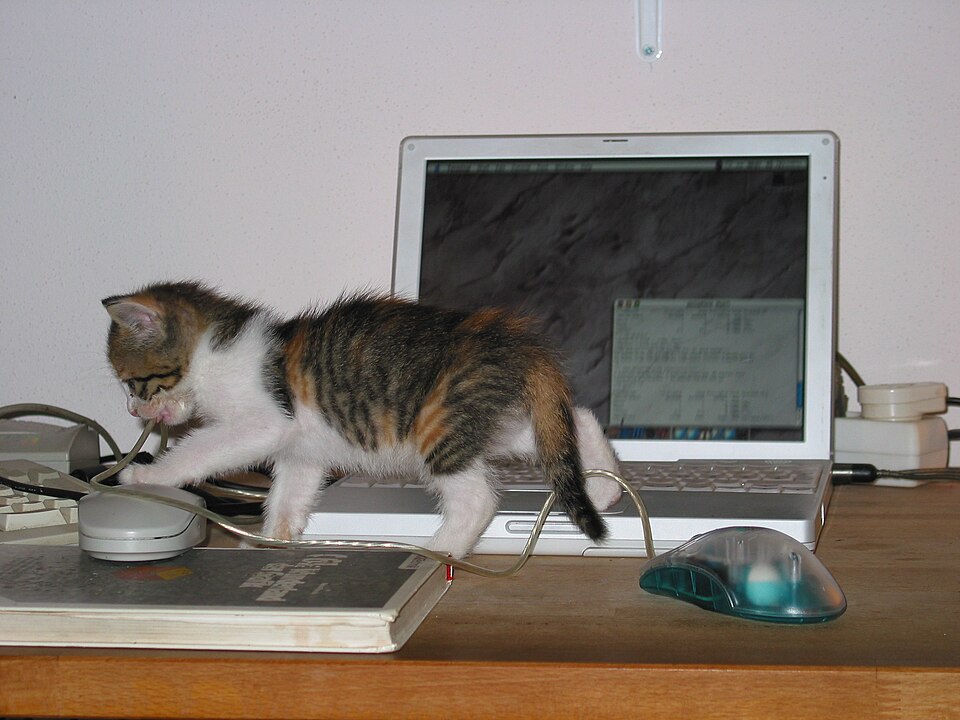
I can’t really remember that semester; just the joke that got progressively sadder with each mention. I remember being disappointed about a lot of things, but I was lucky—I was home, and safe. I went to an amazing college with professors who were the best. Small classes, lots of discussion, lots of interaction. Again: I was lucky. Lots of cats walked onscreen. My cat did it at least twice a week.
Though my professors went above and beyond with the few resources they were given, something was missing. I ached to have the community that I loved so dearly. I wanted out-of-class talks, those random run-ins; and though no virtual space could perfectly echo the physical space of my 400-person campus, I did the best thing I could and made a Discord server.
It was called the Creative Confluence, and it was a space for art-minded students of all types, no matter their major, skill level, or year. We could talk about anything, everything—but the highlight was the review corner. In it, people would send their works at any stage, any type—visual art, short stories, poetry, songwriting, crafts—to get critiqued. And feedback was given. It was egalitarian, and it helped many of us get an extra set of eyes on our work. Additionally, we shared resources—internships, contests, events, and more.
It worked. It filled the hole as well as it could.
In hindsight, I didn’t even realize it was a form of mutual aid. I just wanted to help people and get help myself. And again: it worked. It’s still alive.
There is one thing I can remember clearly about the pandemic—the news talking about mutual aid groups. Maybe subconsciously, I heard about their existence, their function, and wanted to join in the fun.
And now that college is over for me, and many of my friends are scattered across the country, I willingly return to the static, the screens, the pixels, the text.
This time, to say hi.
Mutual Aid in THE PAST, or: The Ordinary History of Helping Each Other
Mutual aid is often framed as a radical, wild idea. In an increasingly depersonalized, individualistic, capitalistic world, to form community and help one another, to give even the slightest sacrifice without the promise of a return, is radical. To assist others without hierarchies and without the public goodwill of charity? That’s even more radical. But here’s the thing: mutual aid is nothing new. In fact, you can argue that it’s the oldest system that we have.

Throughout human history, we’ve organized ourselves into groups to survive. Apes together strong, y’know? Roughly two million years ago, prehistoric humans, who were organized in small, egalitarian, nomadic tribal groups, worked only for the community—not the individual—through mutual aid systems.
They pooled food and built shelters for one another. Communal living isn’t solely human, either—ant colonies, whale pods, lion prides, and other animal species work together to persist.
The root of mutual aid is survival. When people are in times of crisis and have been otherwise failed by the government or society at large, they turn to each other for assistance.
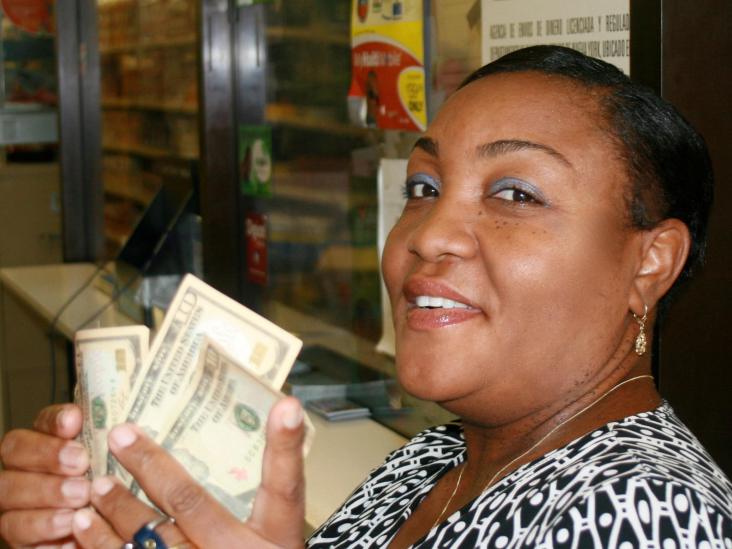
Skipping ahead two million years and some, in West Africa among the Yoruba people, mutual aid programs like the sou-sous (or esusu, ekoto, etc.) grew as one of the first recognized forms of mutual aid. Esusu is a tradition where groups of individuals pool their funds together as an informal savings account that is untethered to any bank or official institution. Then, at certain points, generally by lottery or census, people can pull lump sums from the collection to fill their needs. Once everyone benefits, the cycle restarts. During the Atlantic Slave Trade, the practice of esusu spread into the Caribbean and Latin America. It still exists, like in the story of Marie Lumen Clersaint, the “reigning queen of sous-sous.”
Because mutual aid exists outside of traditional power systems, it has been historically most prevalent in marginalized groups and those who distrust, or have been left behind, those in power. Free meals for schoolchildren began with the Black Panther Party’s mutual aid system, the “Free Breakfast for Schoolchildren Program” in Oakland, California, in 1969.
There is a large, unspoken history of mutual aid in America. Understanding the past can help push us into a better future. Together. After all, if the pandemic taught us something, it reminded us how we are “social creatures.” (Yes, even us introverts.) We need each other to live.
The systems in place now—notably capitalism and white supremacy—have made the concept of mutual assistance radical. And that shows me just how corruptive and deep-seated these systems grow, thorning their way into our basic human instincts. But we can uproot, unlearn, and remove them.
So now that you see some of its past, what is mutual aid, exactly? And why is it a better alternative to other systems of help?
Mutual aid as a term was coined by the Russian anarchist philosopher Peter Kropotkin. His essay collection, Mutual Aid: a Factor of Evolution argues that “cooperation, not competition, was the driving mechanism behind evolution, through biological mutualism.” Mutual aid is, at its root, according to subMedia, “a motivation at play anytime when two or more people work together to solve a problem with the shared benefit of everyone involved.” It is when people build new social programs and relations to fill a need. Mutual aid isn’t just for big disasters, like hurricanes or pandemics. It’s for everyday disasters. When 64% of Americans are living paycheck-to-paycheck, small disasters can be devastating. And mutual aid offsets the potential devastation. Did your pet get sick, and you need funds for an emergency surgery? A sous-sous would assist. Of course, mutual aid programs can be anything and fill any need.
People are forming rapid response networks that give advance warnings of ICE raids and assist immigrants and their families with safety planning in case they get detained, for example. Cities have Buy Nothing groups. Apartment complexes have spaces where people can offer food for others to take before it expires. If you see a problem, you can be the solution.
The main mantra for mutual aid is “Solidarity, not charity.”

Mutual aid isn’t charity, a nonprofit, or a government-run “safety net.” Note: I will be primarily using the term ‘charity’ here, but it is in this case interchangeable with the other terms. It is run by the people, for the people. Philanthropy is not as helpful as it seems—only a fifth of the money donated by the wealthy goes to the populations they’re trying to help. It is used as a way to sway public opinion on certain controversial figures, like billionaires Charles Koch, George Soros, or Bill Gates. Plus, the wealthy who do charity can use their donations for those sweet tax-write-offs. That constellation of charities, foundations, and funders is known as the Nonprofit Industrial Complex—a name we borrow deliberately and a little sideways to describe a system that professionalizes “help” while keeping inequality comfortably intact. Charities work vertically and top-down; mutual aid works horizontally and equally.
Charity blames the individual for their problems, whereas mutual aid blames the system. Charity often has strings attached and often targets certain demographics, which then excludes others. For example, the Salvation Army has multiple allegations of discrimination and lobbying against trans and queer people.
Mutual aid doesn’t discriminate. It works to mutually liberate those who participate rather than reaffirm the systems of oppression, which charity instead upholds. Charity doesn’t challenge the system—mutual aid does. Mutual aid is to build solidarity with other people in need to start a movement. Once the system of oppression is broken, we can continue to work together for a better future—together.

And hopefully, in the process, the basic human instinct to help one another will be radical no more.
In my next posts, I’ll go into the PRESENT of mutual aid and into the FUTURE with a solarpunk short story.

Gina Marie Gruss (she/her) is a junior editor for Brink Literacy Project, a library assistant in youth services, and a freelance writer, editor, artist, and designer. Her works have been featured by Amazon Prime Video, Mensa America, Wattpad, and have been published by Florida Atlantic University, long con magazine, Breath & Shadow, and F(r)iction Literary Journal. She has edited pieces from authors such as Silvia Moreno-Garcia and Martha Wells. She has been traditionally and self-published for over 10 years.